
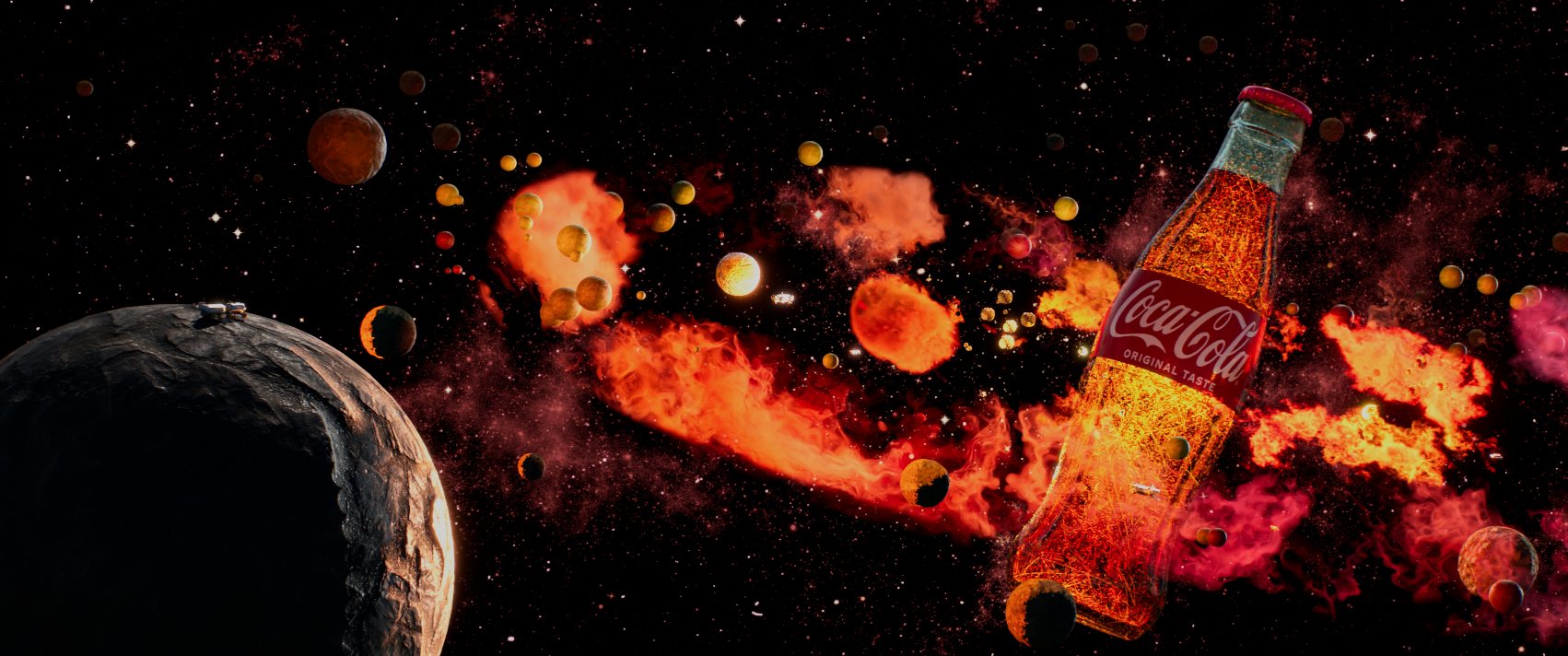
reach for the stars, reach for a coke
the brief
Coca-Cola is launching its new brand campaign: "Reach for the Stars, Reach for a Coke." and has partnered with KitBash3D to search for talented artists to create a five (5) second Proof of Concept for the Advertising Campaign. The sky is the limit, but there are a few creative and technical constraints that you must follow:
Artists MUST use the provided Coca-Cola Bottle and Label Asset
Final Rendering MUST include at least one Kitbash3D Model from the "Mission to Minerva" Kit.
Models: KitBash 3D and WaldemarArt
Concept, Design, Animation: Ananya Ravichandran
Music: Garrett Weyenberg
credits
final animation
research
Coca-Cola’s branding is consistent and iconic. From their barely-changing red and white color scheme, script logo, and curved shape of the bottle, their branding has been cemented across generations.
The themes of their content include happiness and celebration. Their messaging invites audiences to emotionally connect with Coca-Cola and associate the drink with their happiest moments. Rather than focusing on the taste of the drink, the brand centers their advertising around how the drink makes you feel.
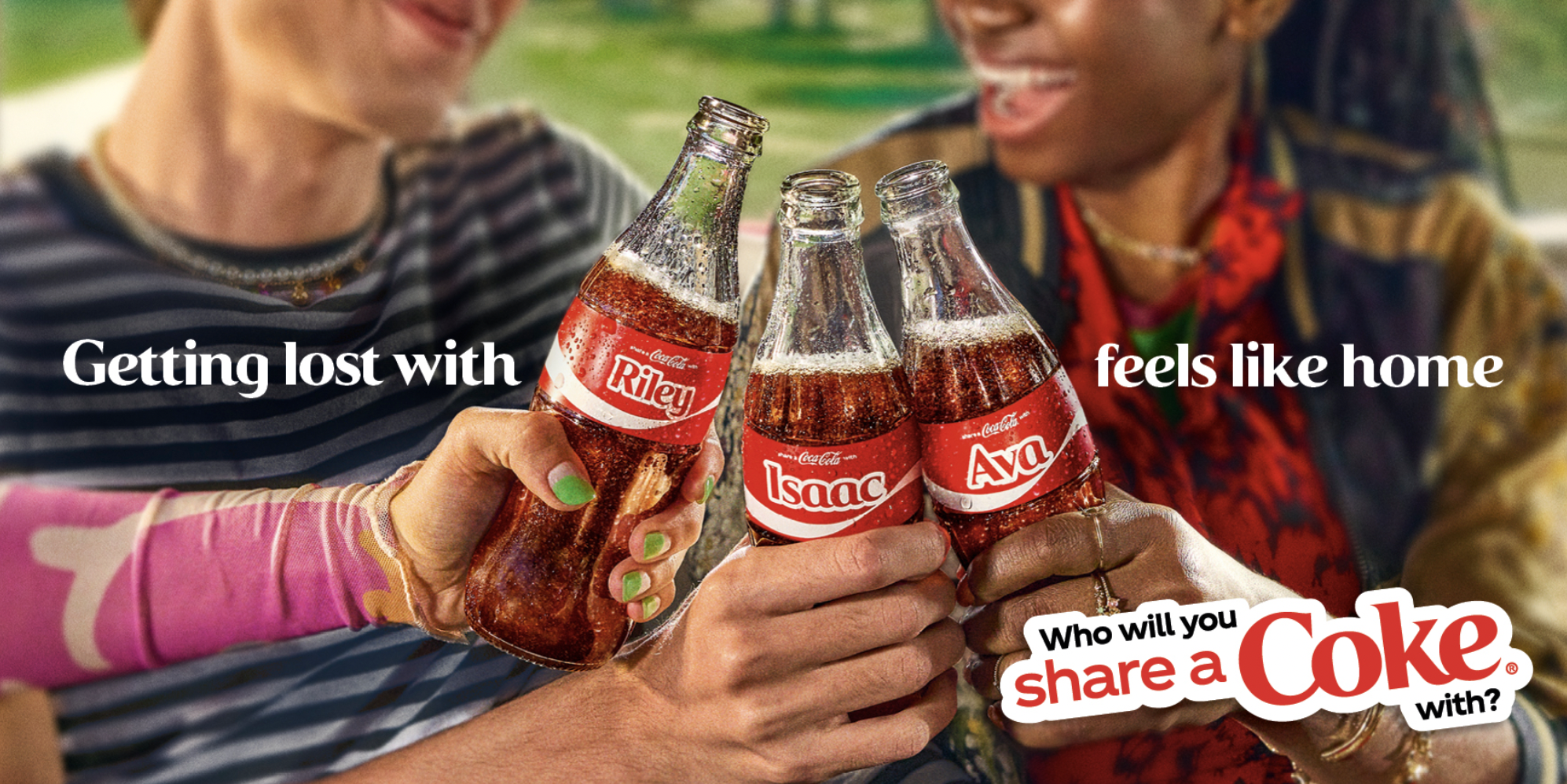
From Coca-Cola’s “Share a Coke” campaign
preparing the assets
Texturing the Coca-Cola Asset
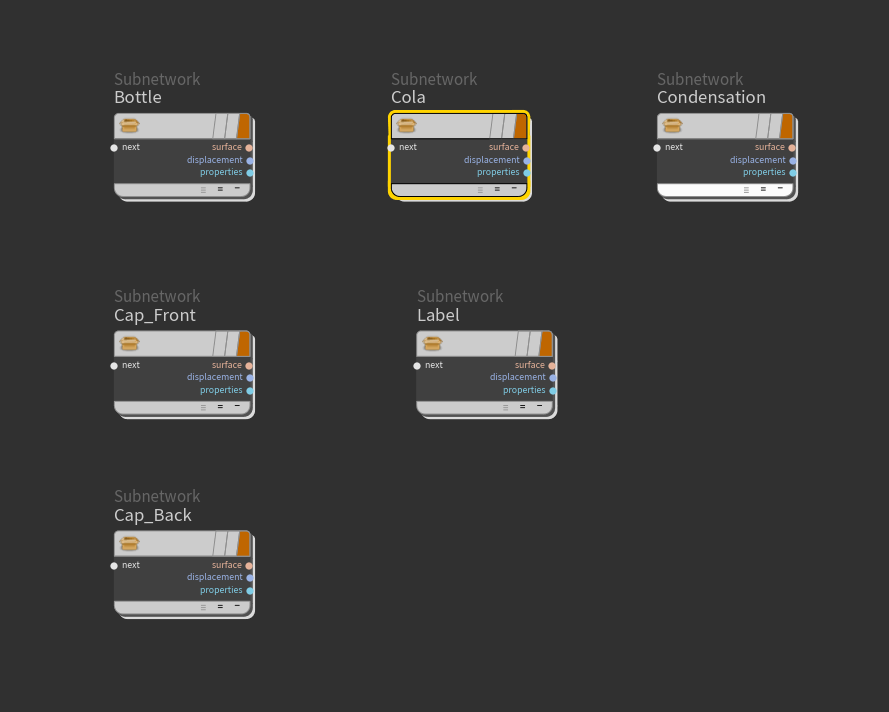
I was provided an asset for the Coca-Cola bottle that I initially had to organize in Cinema4D before texturing it in Houdini. After organizing the file and properly separating the parts of the model in Cinema4D, I individually textured each aspect of the asset in Houdini, using Karma material builders.
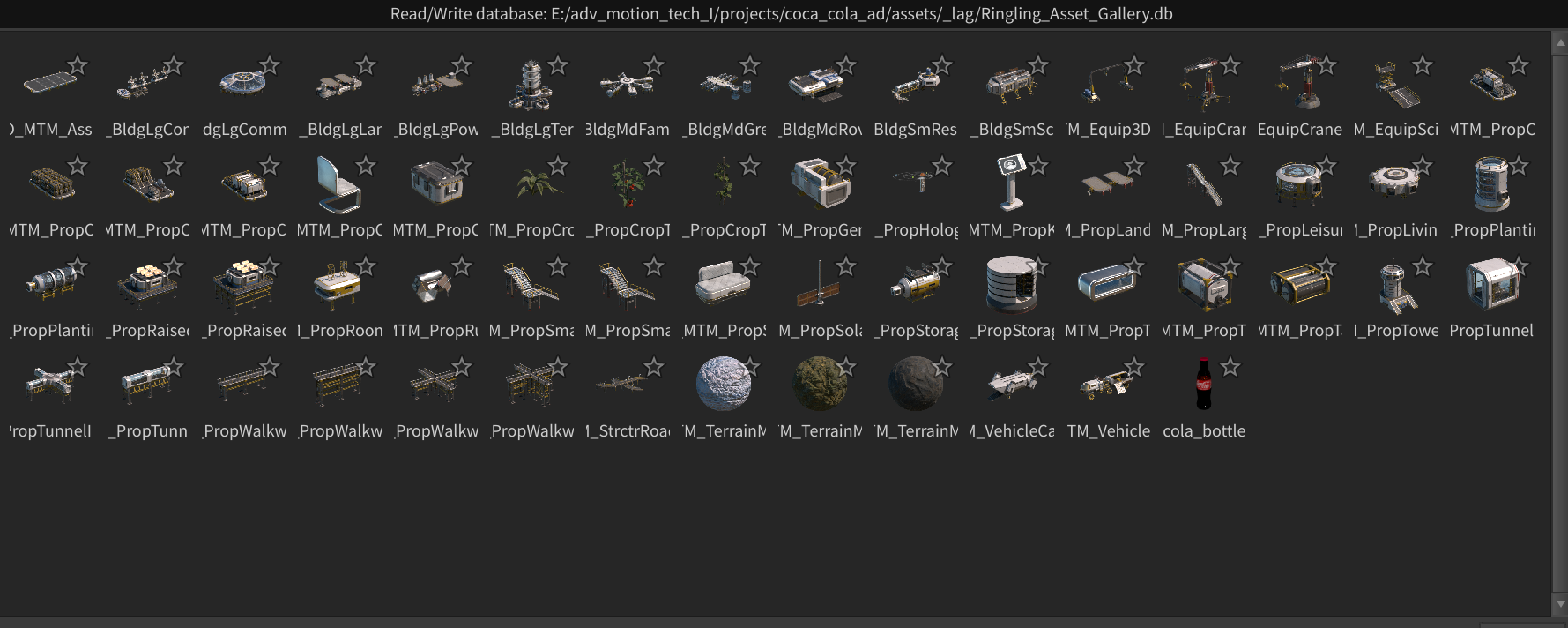
I sourced a variety of assets from Kitbash3D, and had to cache each one and put them into a layout asset gallery for future use. Although this process was simple, it was time-consuming because there were over 60 assets.
Preparing the Layout Asset Gallery
concept: Coca-Cola Galaxy
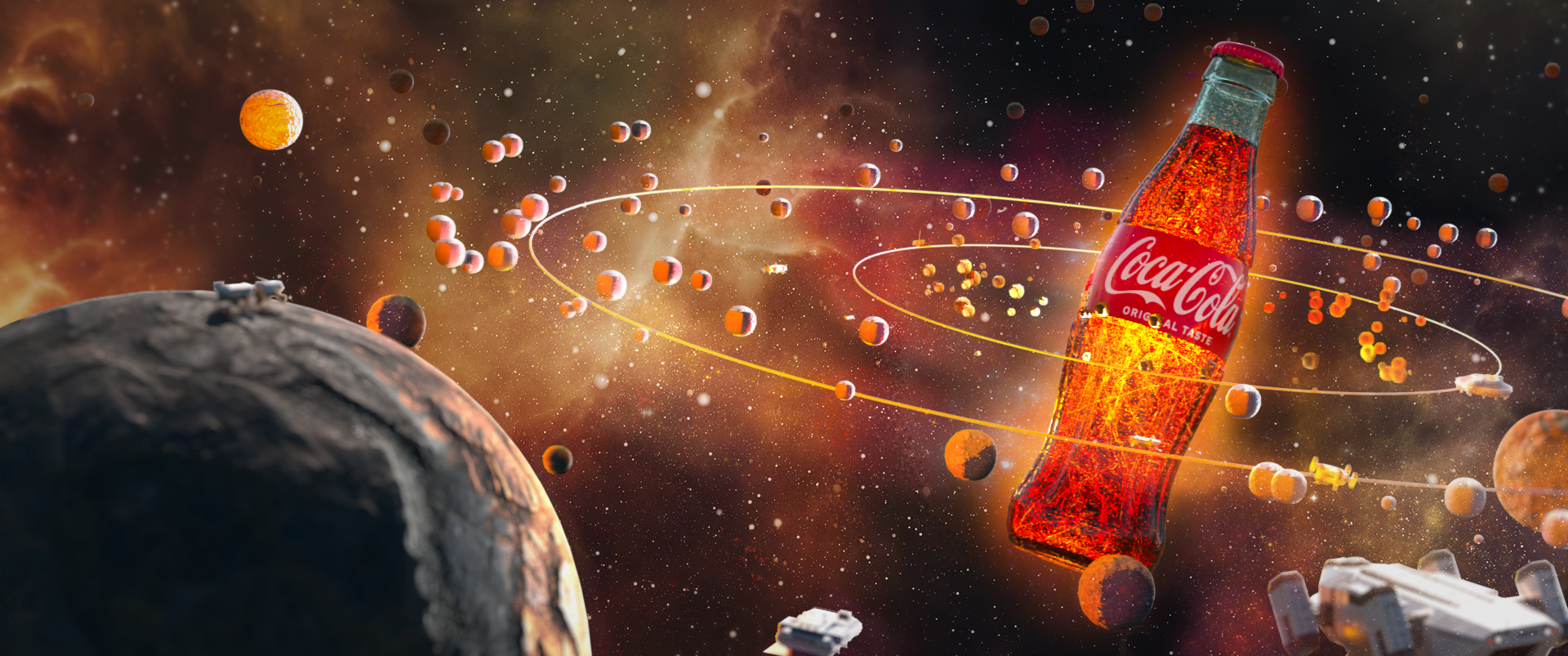
Style Frame for Initial Pitch
STORYBOARD
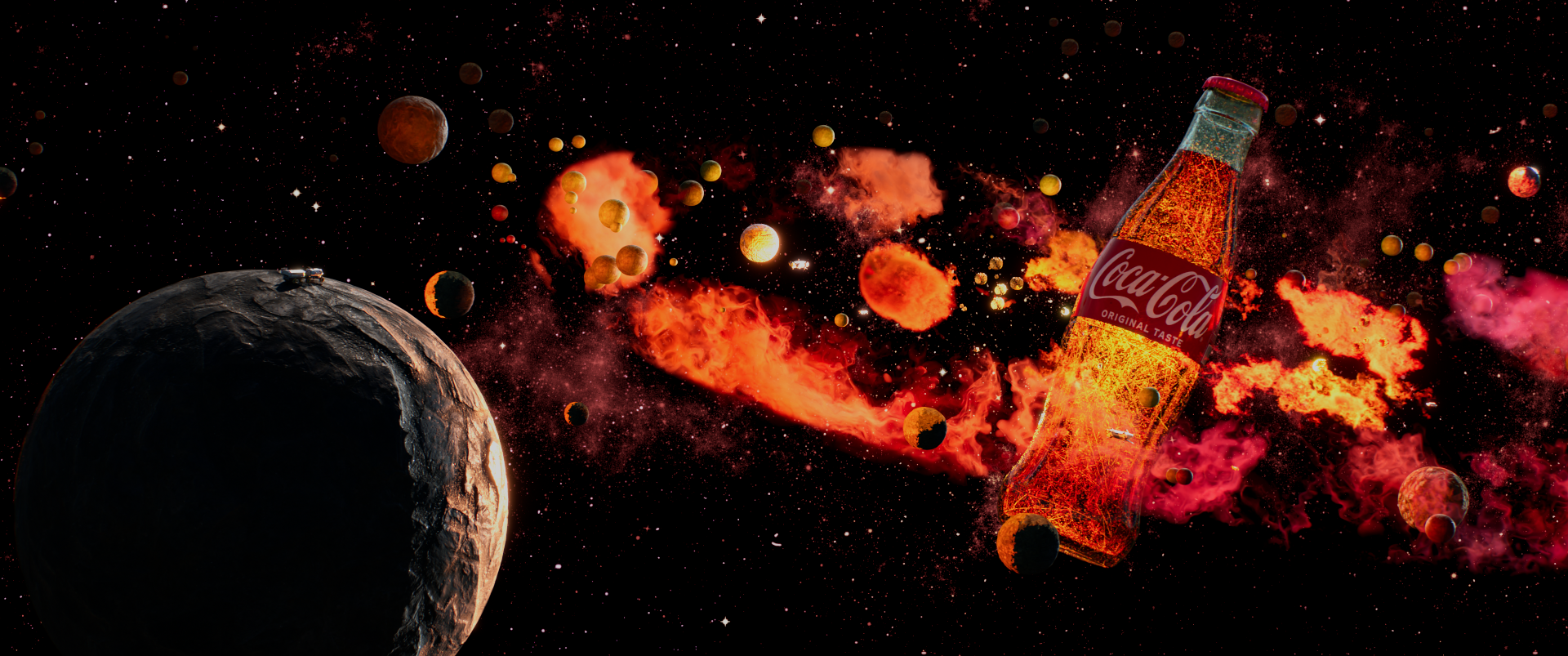
Style Frame for Final Pitch
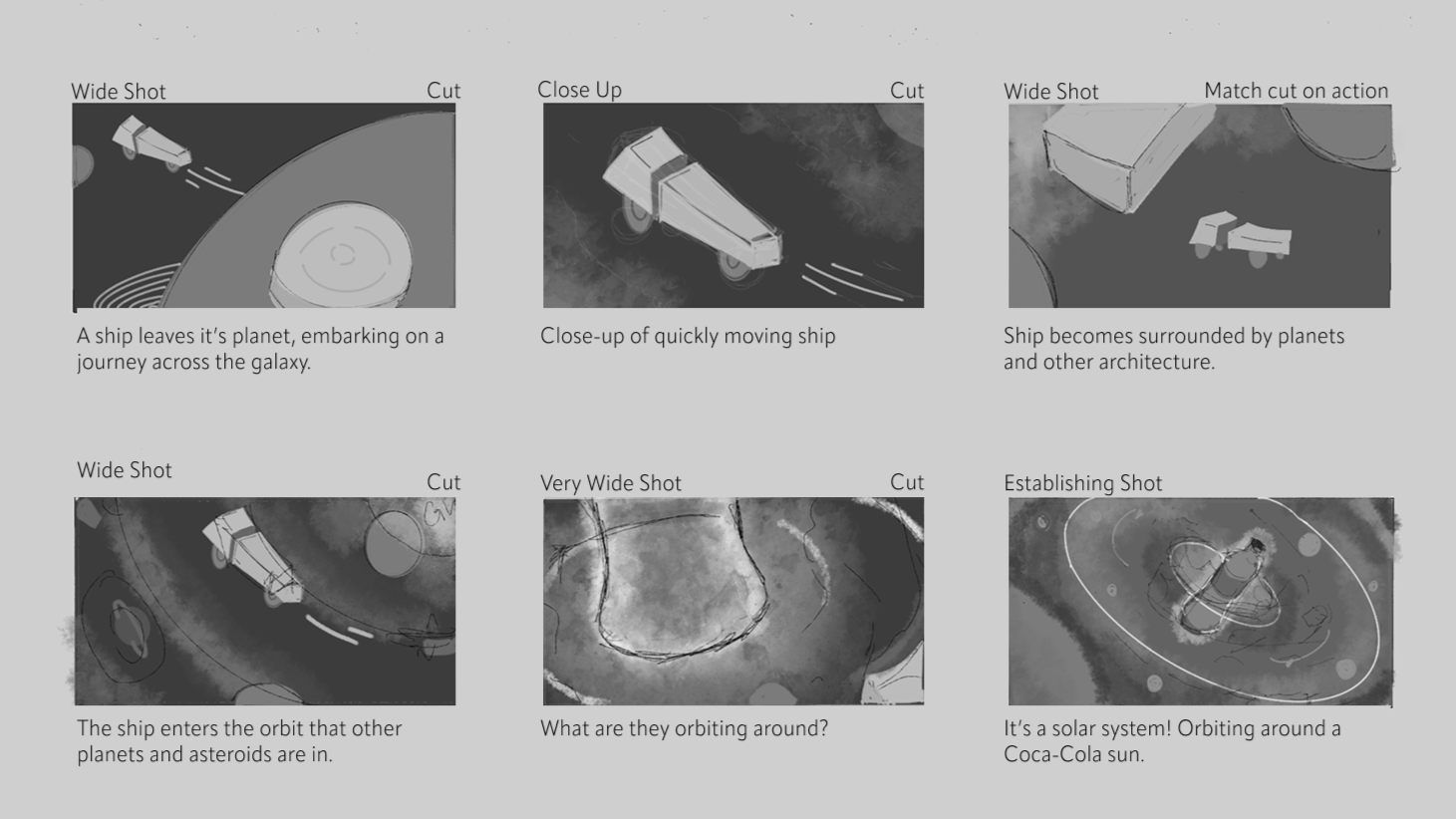
Concept: A solar system filled with asteroids, planets, and spaceships revolves around its central life source, the majestic Coca-Cola bottle.
I wanted this ad to highlight the brand as the center of an exciting galaxy, communicating wonder and adventure.
MOODBOARD
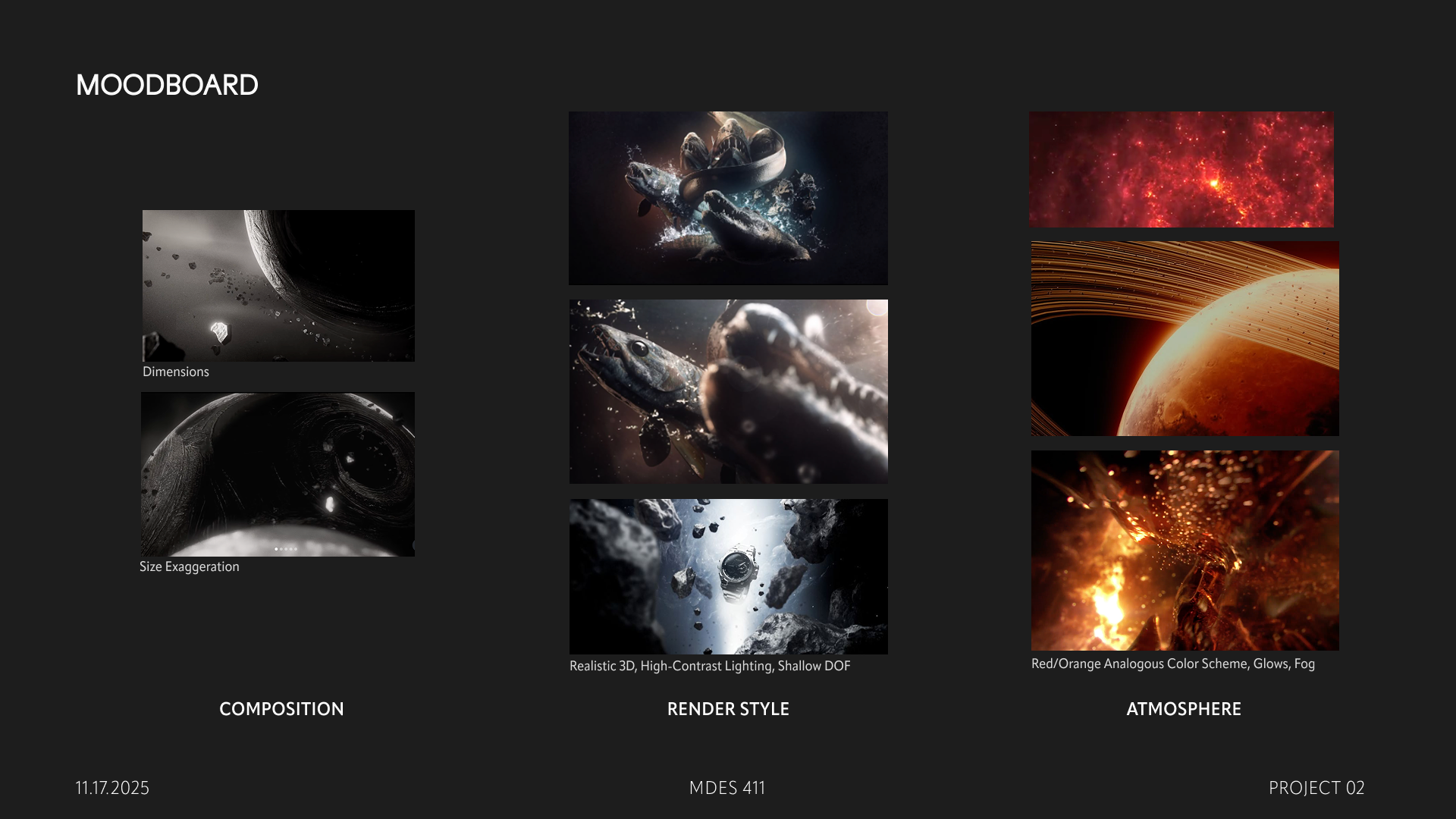
Style: realistic 3D with dramatic lighting, with red and orange colors maintaining the colors of the brand
setting the scene
planets
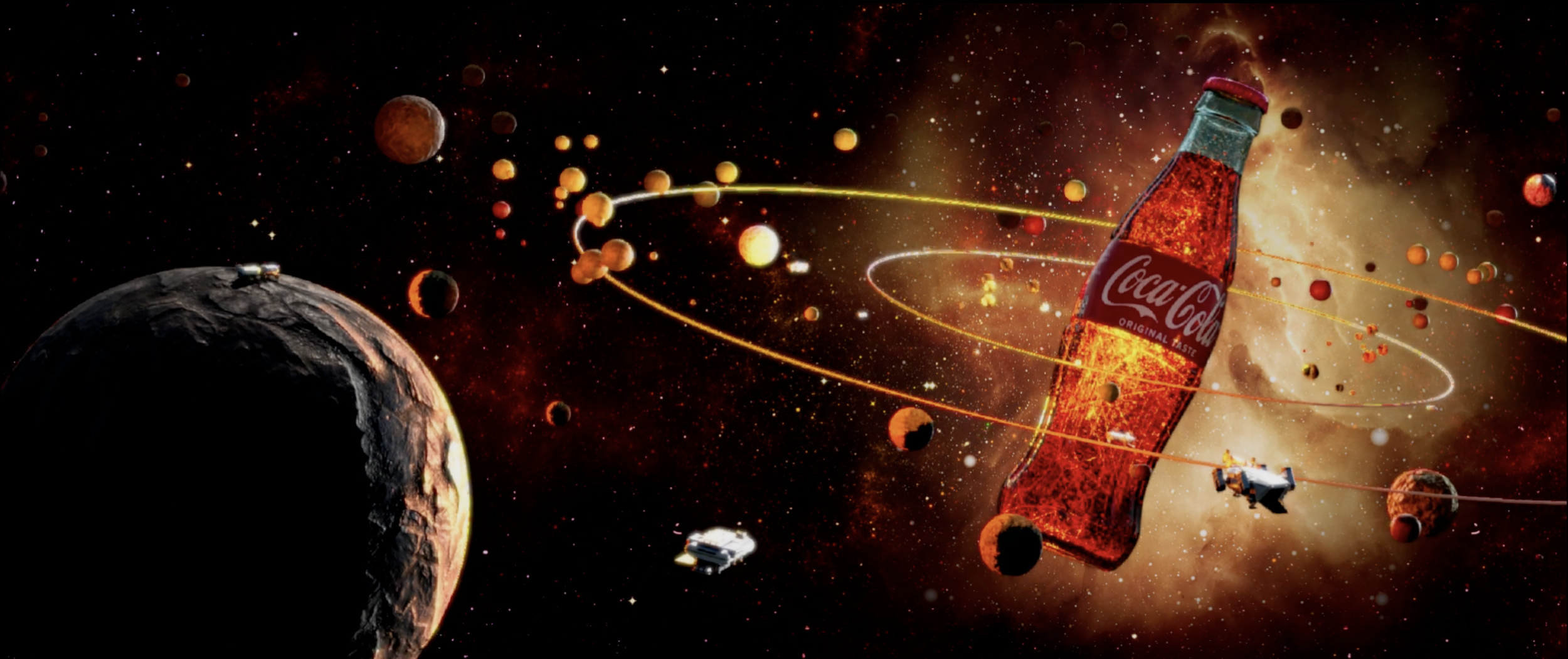
In an earlier design pass, I had physical rings encompassing the planets instead of the nebula system I had in the final pass. Earlier issues with design included too many planets and inconsistencies with color spaces.
rocks
final ground look
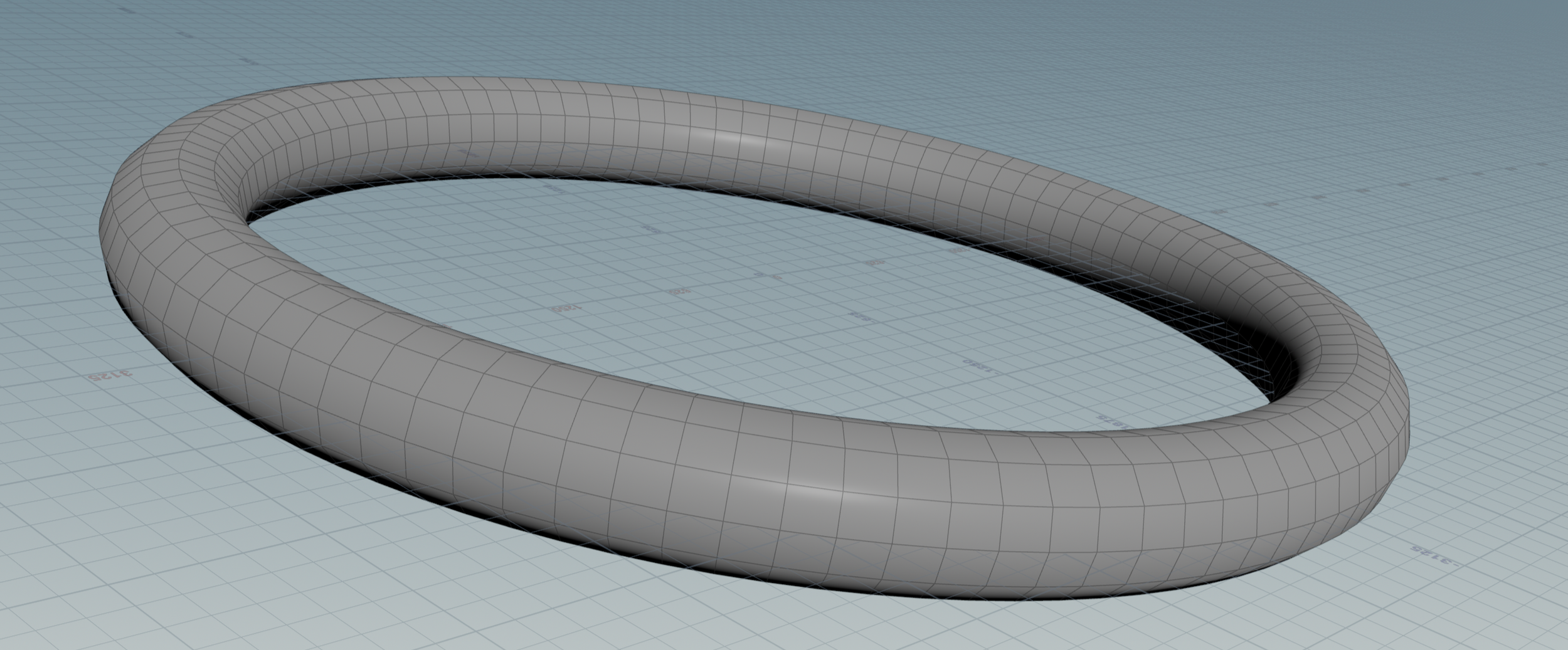
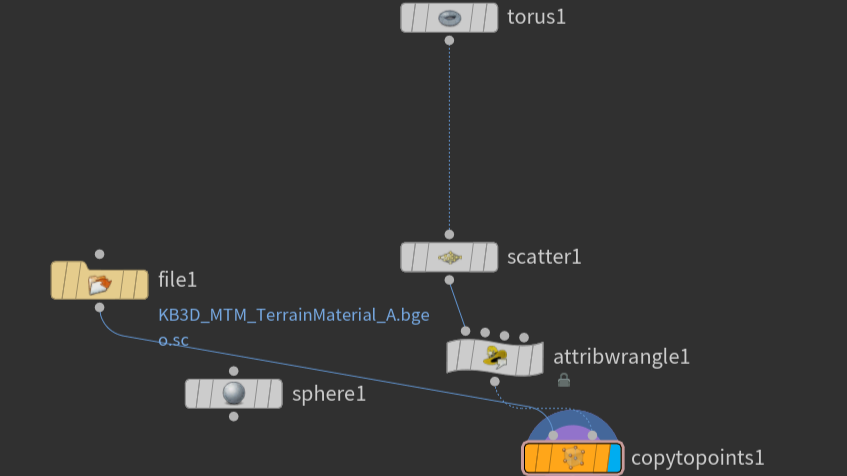
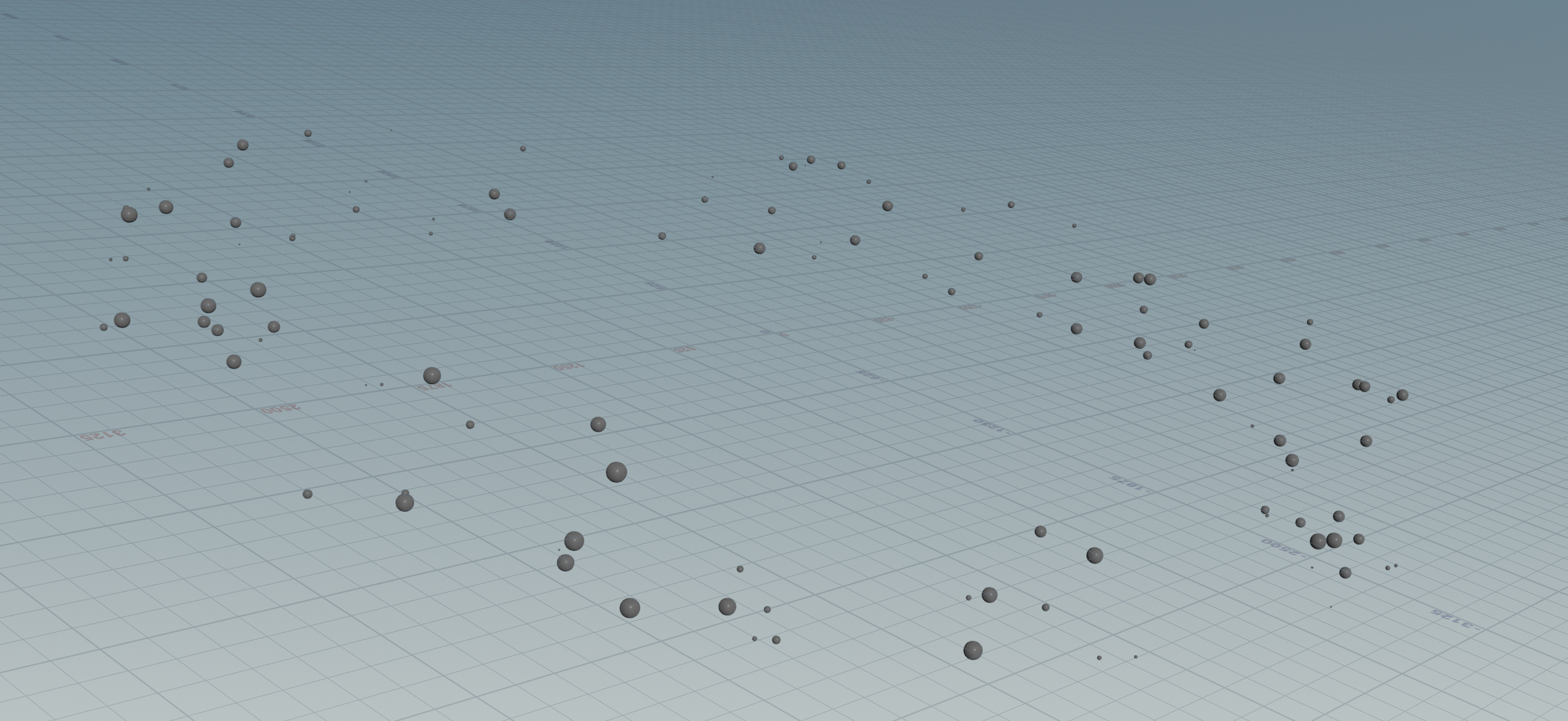
I set up a system of planets using a sopcreate node and a shape that a group of spheres would be constrained to. Within this node, I could adjust other parameters of the planets such as amount, scale, etc. This was how I created a solar system of planets that I could orbit around one object.
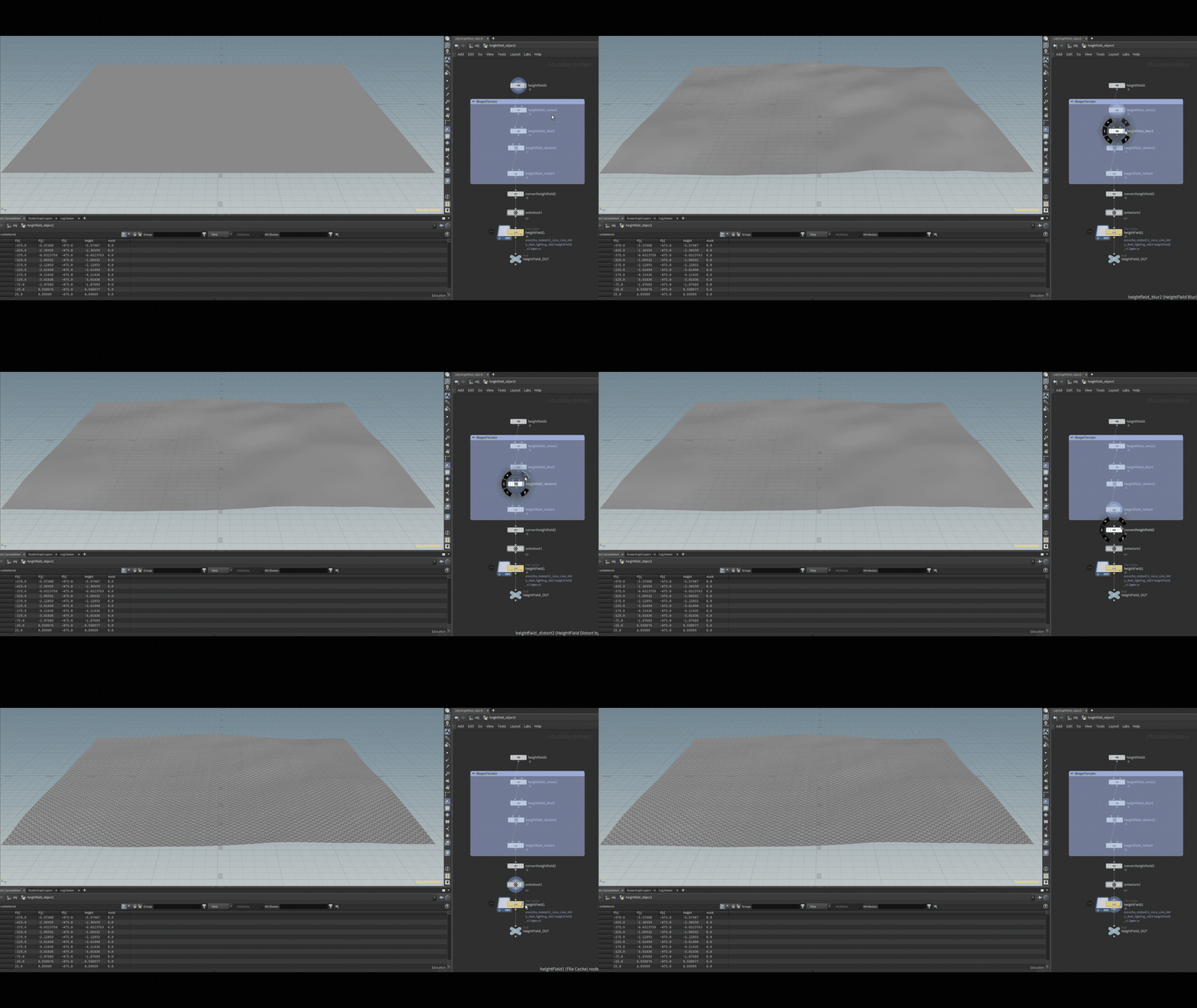
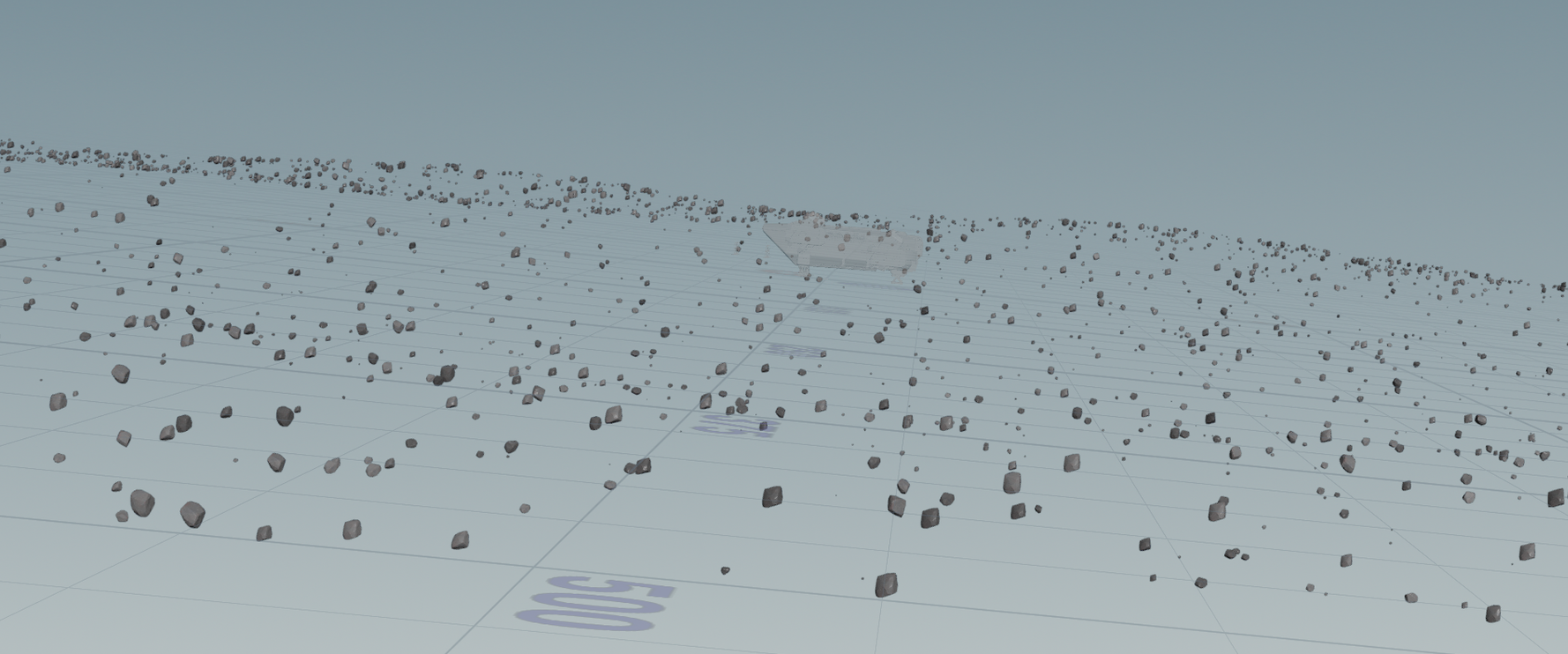
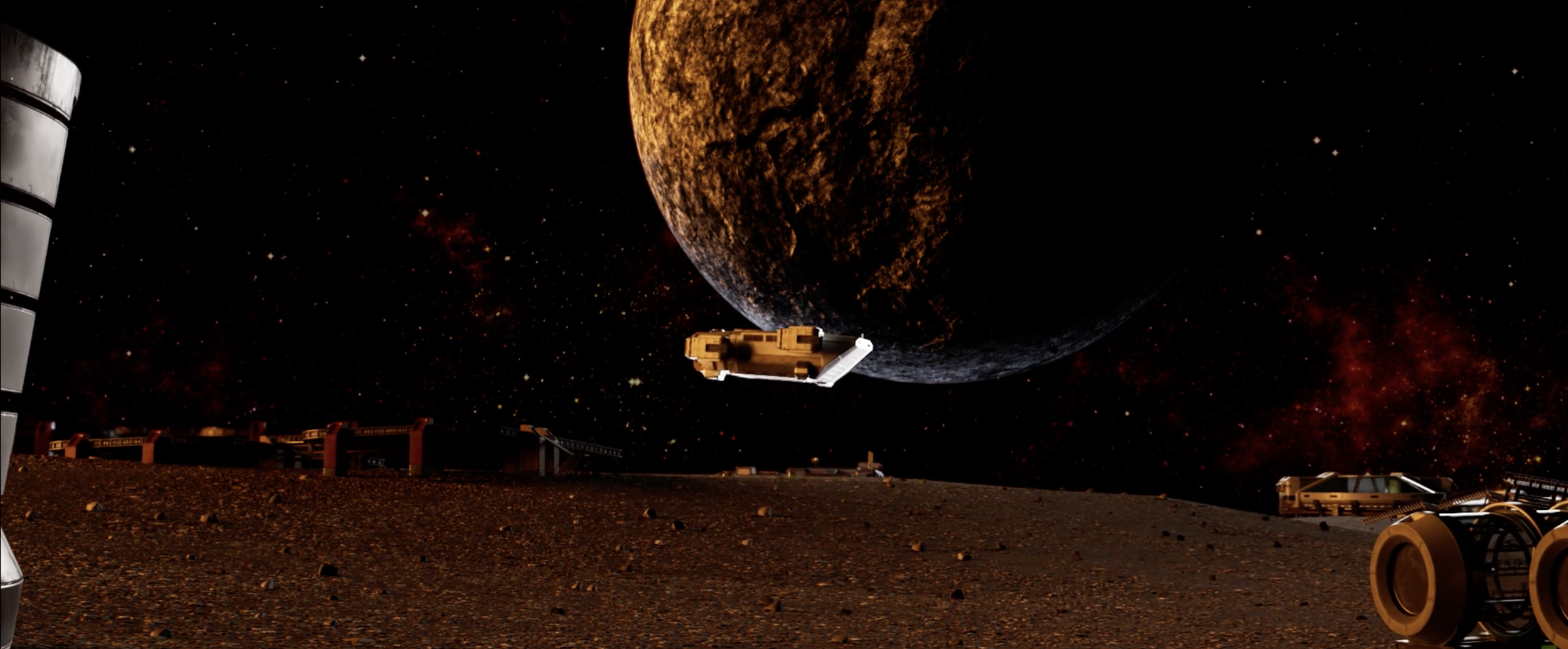
For my first shot, I created the ground plane using a heightfield, and then used a noise attribute to model low-poly rocks that were randomly scattered across the plane. Credit to Gavin Alvares for showing me the rock scattering system!
One of the challenges with the heightfield was having to rescale the UV map because any texture applied to it would warp and stretch out. However, if the UV map was too dense, the scene would repeatedly crash and not render.
animation
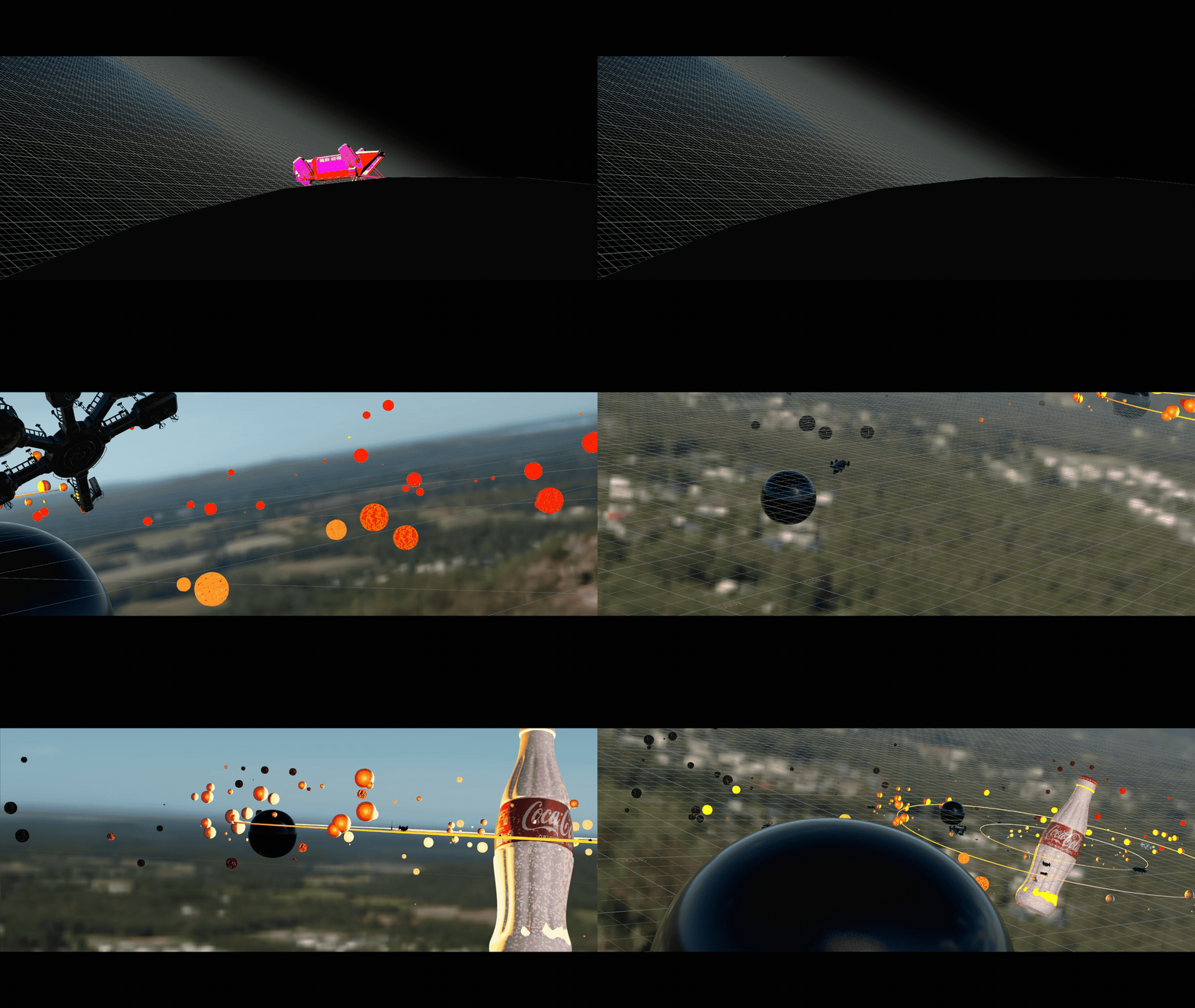
FIRST PASS ANIMATION
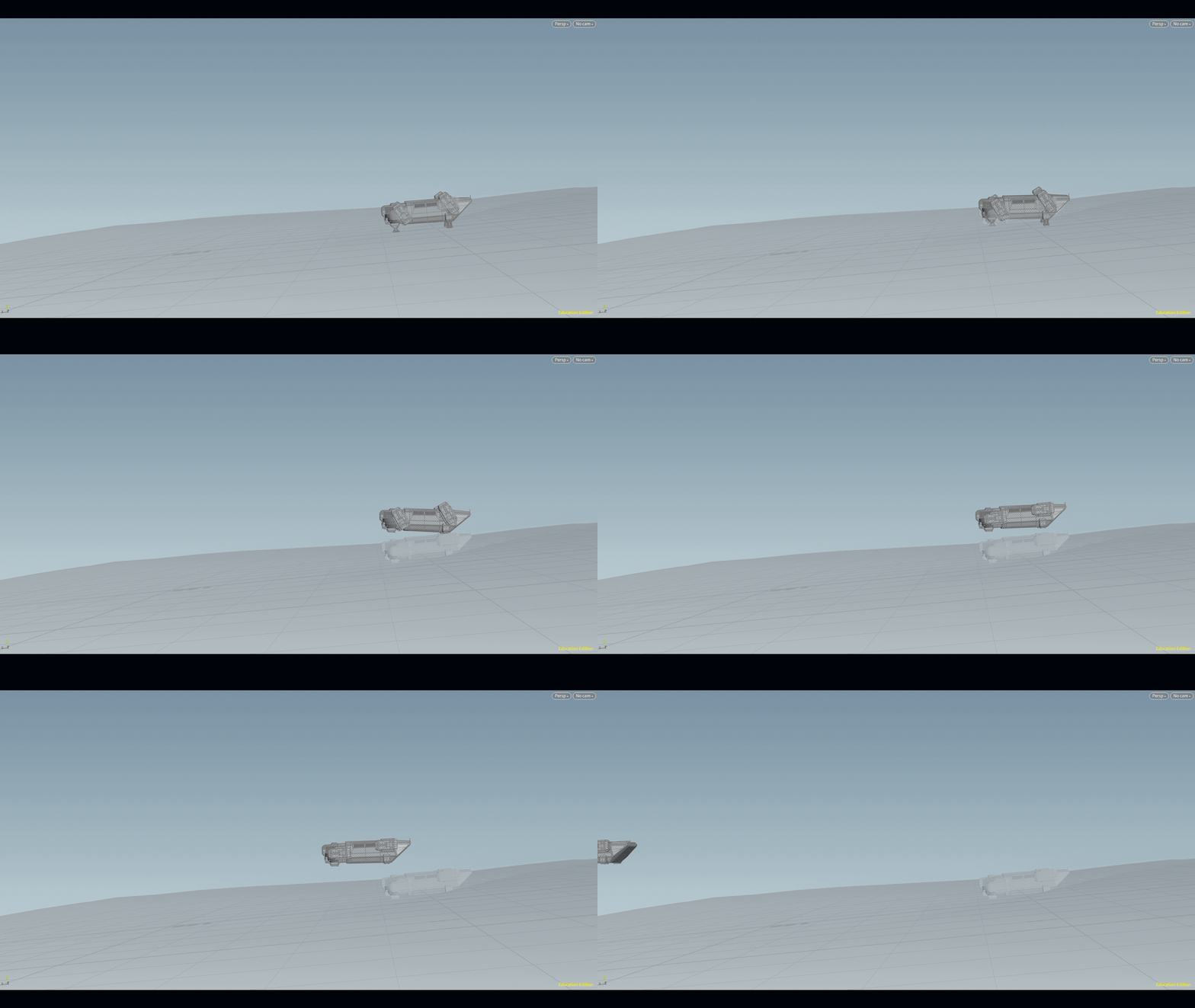
I wanted the animation of the piece to communicate the scale of the galaxy that the Coca-Cola bottle powers. In my initial animation passes, the animation was too fast overall and not properly communicating the large scale of the objects. I also had unnecessary shots that I removed in the final piece.
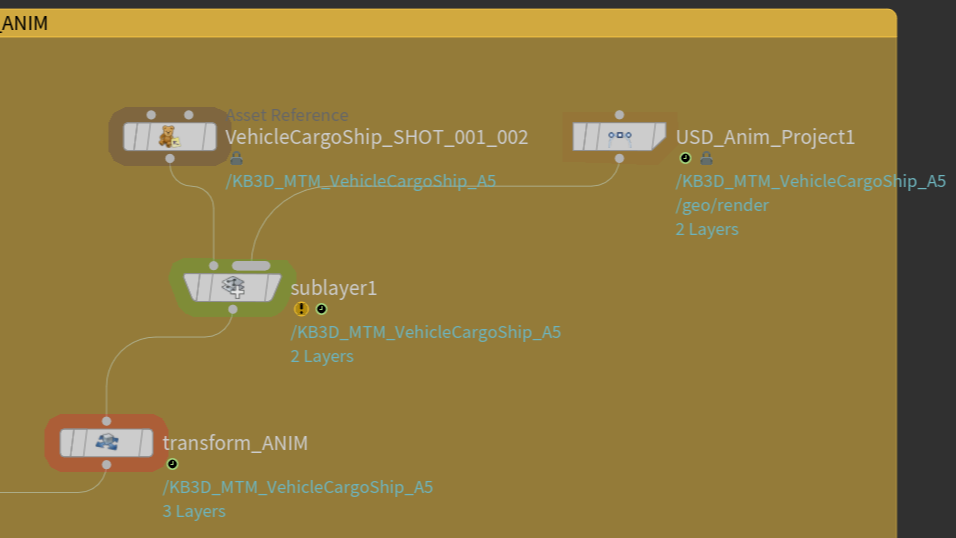
I animated the ship in the object context and used a USD_anim_project node to bring the animation into the stage context, projecting the animation into an existing ship in the stage context. Some of the challenges I faced include the USD authoring and textures not working properly - it took trial and error to resolve these issues.
FINAL SHIP ANIMATION
texturing
PLANETS
NEBULa
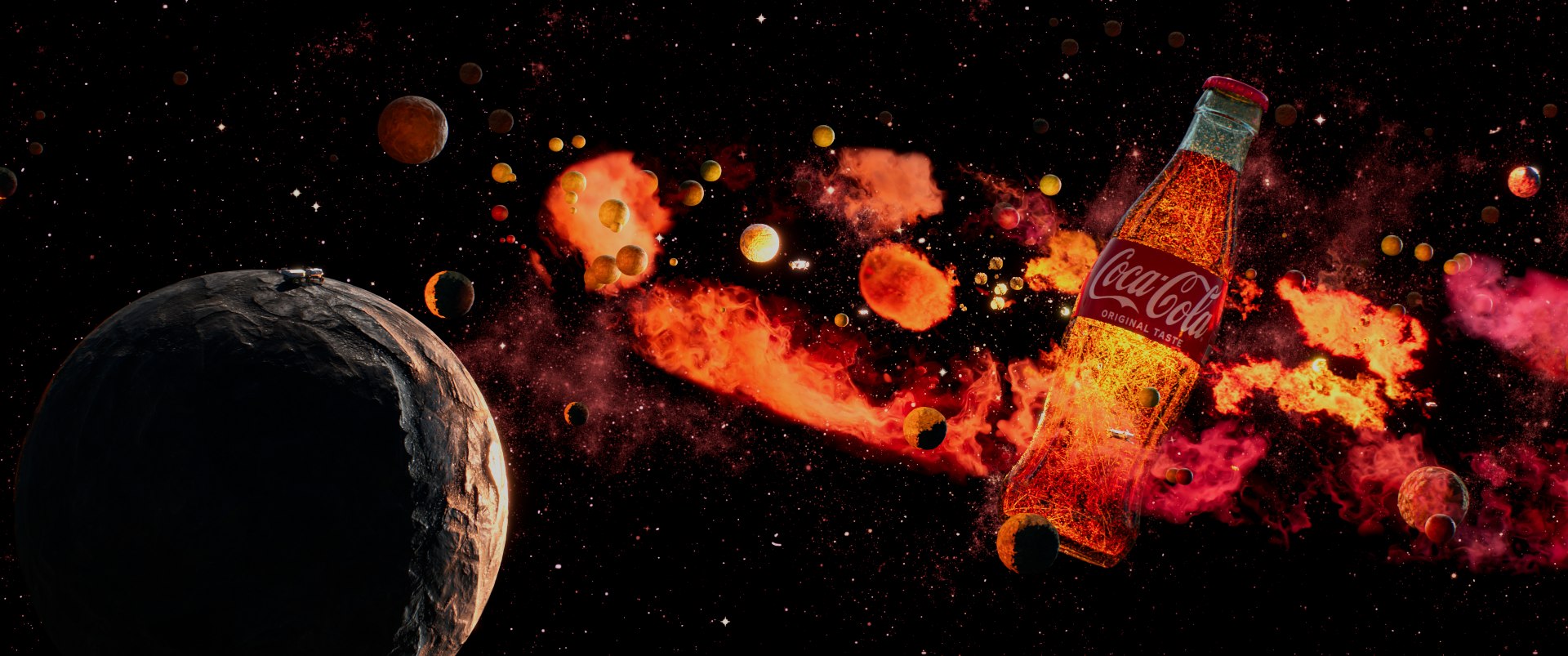
I created the planet textures in Substance Painter by layering various rock, ground and sand textures and messing with their displacements. In Houdini, I duplicated this texture and added color correct nodes to each texture with different colors, so that I could have varying colors of planets throughout the solar system.
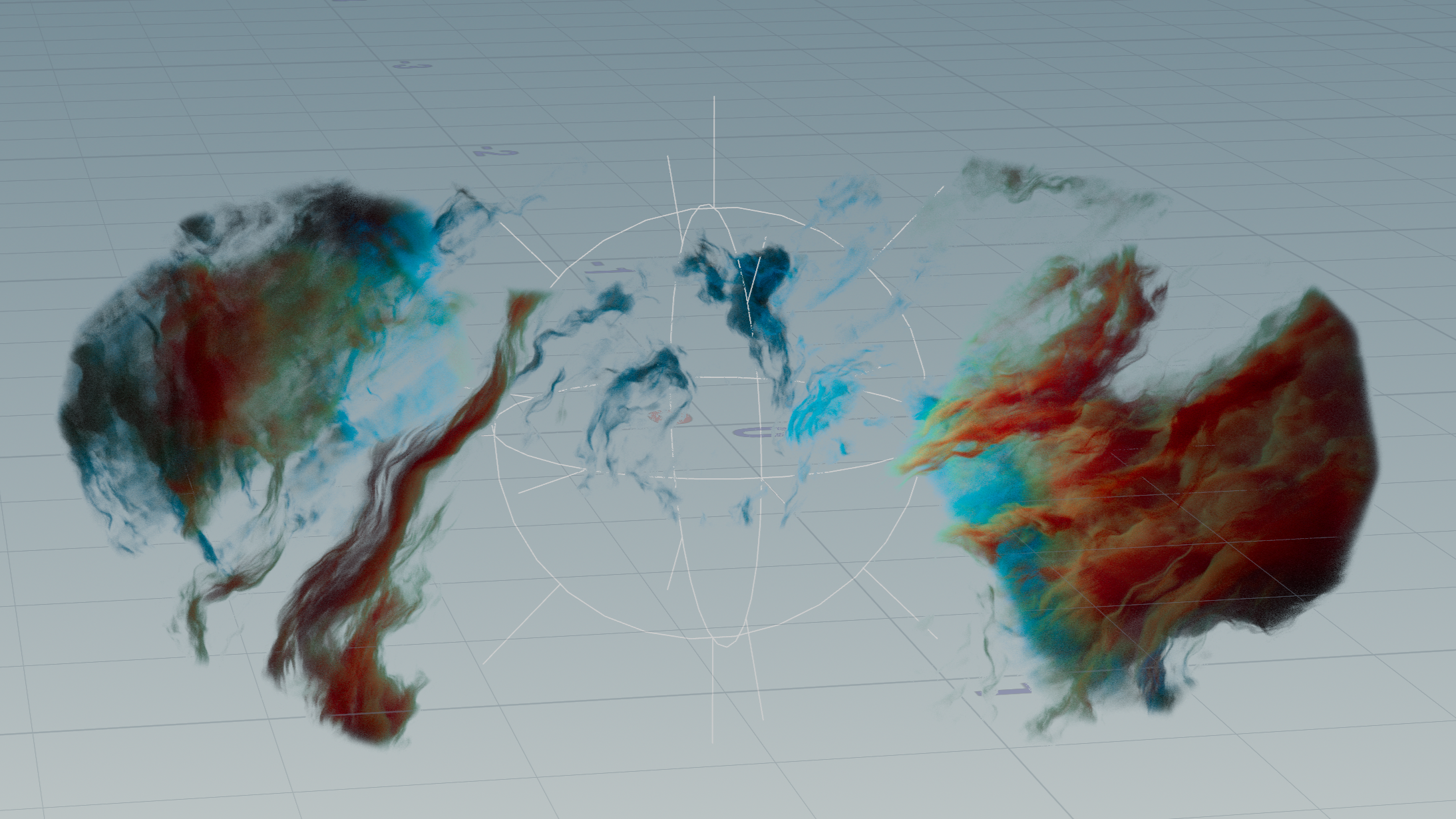
This nebula system originally came from user 0x384c0 on Github. I changed the colors and the density of the nebula in its material library so that I could achieve a result that fit the atmosphere of my scene.
One of the challenges I had working with this file included not being able to scale the nebula system up to match the large scale of my scene. The nebula was too dense and my scene continuously crashed whenever I tried to implement it. To solve this. I cached the nebula at a small size and then scaled the cached file up in my scene. I alsohad to learn how the nebula’s density and colors were being controlled in someone else’s material library, and modify those parameters to fit my scene.
compositing
LIGHTING AND VFX BREAKDOWN
FINAL RENDER! (no audio)